

One of the most common fitness questions isn’t about what exercises to do — it’s about how often to do them. Should you lift weights every day? Is 3 days enough? Can you train 6 days a week without burning out?
The answer depends on your goal. A man trying to build muscle needs a different frequency than one trying to lose fat or improve endurance. This guide breaks down the optimal training frequency for every common fitness goal, backed by sports science research.
The Science of Training Frequency
Training frequency refers to how many days per week you train, but there’s a more important metric: muscle group frequency — how often you train each muscle group per week. A 2016 meta-analysis published in the journal Sports Medicine found that training each muscle group twice per week produced significantly more muscle growth than training it once per week (the traditional “bro split“).
The key insight: total weekly volume matters more than training frequency. Doing 12 sets of chest per week produces similar results whether you do them in 2 sessions or 4. But there’s a practical limit — you can only recover from so much volume per session before quality drops.
Goal 1: Building Muscle (Hypertrophy)
Optimal Frequency: 3-5 days per week
For muscle building, the research points to training each muscle group 2 times per week. Here are the most effective schedules:
3 Days Per Week — Full Body: The best option for beginners and those short on time. Train Monday, Wednesday, Friday. Each session hits all major muscle groups. This naturally gives each muscle group 48 hours of recovery between sessions.
4 Days Per Week — Upper/Lower Split: Train Monday (upper), Tuesday (lower), Thursday (upper), Friday (lower). Each muscle group is hit twice per week with more volume per session than a full-body approach. Ideal for intermediate lifters.
5 Days Per Week — Push/Pull/Legs: Train Monday (push), Tuesday (pull), Wednesday (legs), Thursday (push), Friday (pull). Rotate through the cycle, hitting each muscle group every 4-5 days. Best for advanced lifters who can handle higher volume.
Volume Guidelines
- Per muscle group, per session: 6-10 working sets
- Per muscle group, per week: 12-20 working sets total
- Rep range: 6-15 reps per set
- Rest between sets: 60-120 seconds
Goal 2: Losing Fat
Optimal Frequency: 4-5 days per week
Fat loss requires a caloric deficit (eating less than you burn). Exercise increases that deficit while preserving muscle. The goal here is maximizing calorie expenditure without losing muscle or burning out.
Recommended structure:
- 3 days resistance training: Full-body or upper/lower split to preserve muscle mass
- 2 days cardio: 30-45 minutes of moderate-intensity cardio (brisk walking, cycling) or 15-20 minutes of HIIT
- 1-2 days active recovery: Walking, stretching, light yoga
The biggest mistake men make during fat loss is prioritizing cardio over strength training. Resistance training is what preserves muscle in a deficit. Cardio adds to the calorie deficit but does little to prevent muscle loss. Keep lifting, and add cardio on top — not instead.
Goal 3: Building Strength
Optimal Frequency: 3-4 days per week
Strength training (maximal force production) is different from hypertrophy (muscle size). Strength requires heavy weights (85%+ of 1-rep max), low reps (3-6), and long rest periods (3-5 minutes). Because the intensity is higher, you need more recovery between sessions.
Recommended structure:
- 3 days full body: Focus on squats, deadlifts, bench press, overhead press, rows. 3-5 working sets of 3-6 reps.
- 4 days upper/lower: Allows more volume per session. Each day focuses on one or two main lifts followed by accessories.
Strength gains require progressive overload — adding weight to the bar. Start at a weight you can handle for all sets with good form, and add 2.5-5 lbs each week. When you plateau, deload (reduce weights by 40-50% for one week) and ramp back up.
Goal 4: General Health and Longevity
Optimal Frequency: 3-4 days per week
If your goal is simply to be healthy, feel good, and live long, you need less training than you think. The World Health Organization recommends 150-300 minutes of moderate-intensity or 75-150 minutes of vigorous-intensity aerobic activity per week, plus 2 days of strength training.
Minimum effective dose:
- 2 days strength training: Full-body, 20-30 minutes each, focusing on compound movements
- 2-3 days moderate cardio: 30-minute walks or cycling at a conversational pace
- Daily movement: Aim for 7,000+ steps
Research shows that even this modest amount reduces all-cause mortality risk by 30-40%. You don’t need to live in the gym to be healthy.
Goal 5: Athletic Performance
Optimal Frequency: 5-6 days per week
Athletes need more training because they’re developing multiple qualities: strength, power, speed, endurance, and skill. A typical schedule:
- 3-4 days strength/power training
- 2-3 days sport-specific practice
- 1 day complete rest
The key for athletes is periodization — systematically varying training intensity and volume throughout the year. You can’t train at maximum intensity year-round. Build phases of higher volume (off-season), higher intensity (pre-season), and maintenance (in-season).
Signs You’re Training Too Much
More is not always better. Overtraining is a real condition that stalls progress and can lead to injury. Watch for these warning signs:
- Performance regression: You’re getting weaker despite training harder
- Persistent fatigue: You feel tired all day, even after rest days
- Poor sleep: Paradoxically, overtraining can cause insomnia
- Elevated resting heart rate: 5-10 bpm above your normal baseline
- Loss of motivation: The thought of training feels like a chore
- Nagging injuries: Joint pain that doesn’t resolve with rest
- Decreased appetite: Unusual loss of hunger
If you notice 2-3 of these symptoms, take a deload week (reduce volume and intensity by 50%). If symptoms persist, take a full week off. The most effective athletes and fitness enthusiasts know when to rest.
The Most Important Factor: Consistency
Here’s the truth that no fitness influencer will tell you: the perfect training frequency is the one you can stick to consistently. Three solid workouts per week for a year will transform your body more than six intense workouts per week that you abandon after a month.
Choose a frequency that fits your life:
- Busy professional: 3 full-body sessions, 45 minutes each
- More time available: 4-day upper/lower split, 60 minutes each
- Minimal time: 2 sessions per week is enough for basic health and strength
Don’t compare your schedule to someone else’s. The best program is the one you actually do.
How to Tell Your Frequency Is Right
Frequency is a scheduling question. Overload, food and sleep are the growth questions. Judge the schedule by whether you can repeat it.
- Weeks one to two: every session feels manageable and you are not carrying soreness into the next one.
- Weeks four to eight: the numbers on your main lifts move, even slowly.
- Weeks eight to twelve: if they have not moved, change one variable, not all three.
This content is for informational purposes only and does not constitute medical advice. Always consult a healthcare professional before starting or changing an exercise program.
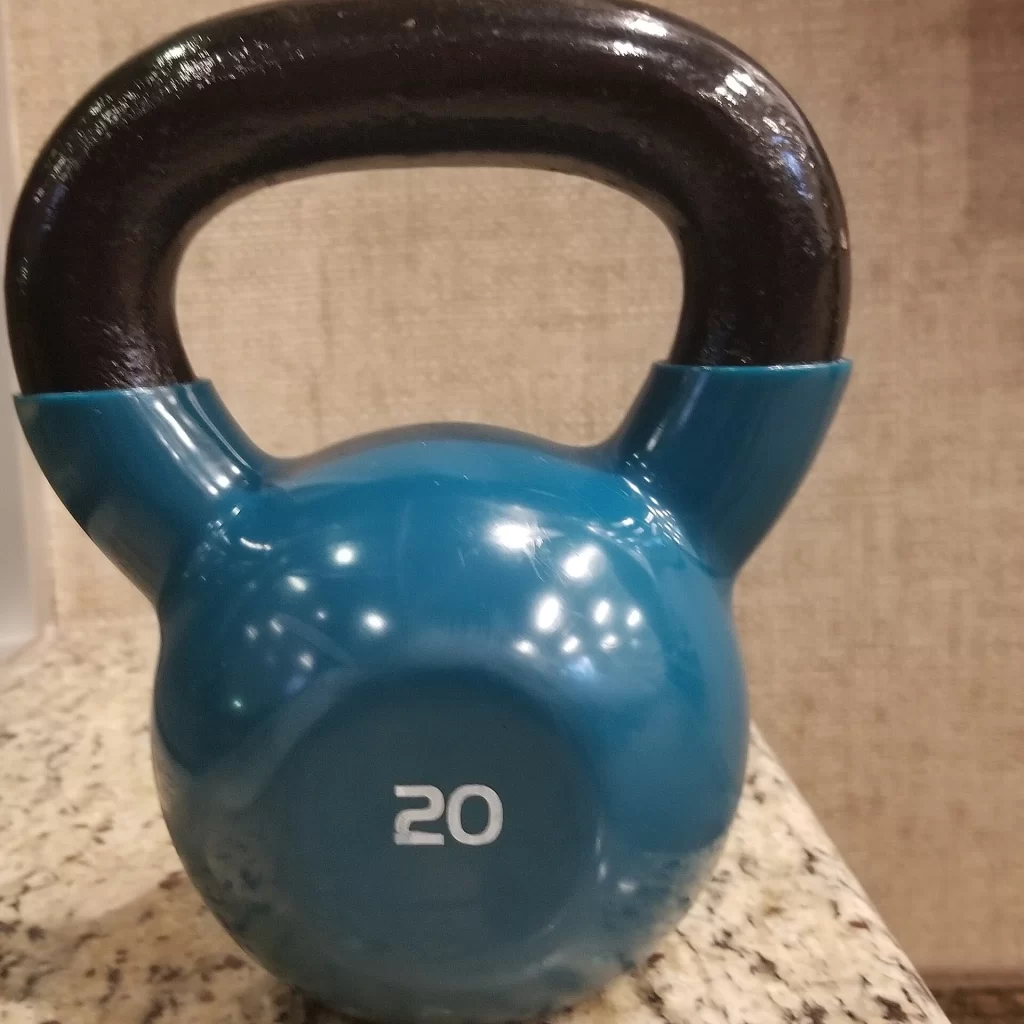
Photo: Dreams of Flowering, CC BY-SA 2.0, via Wikimedia Commons
I was doing 6 days a week (PPL twice over) and wondering why my bench stalled. The point about training each muscle group twice per week makes sense now — I was spreading the same volume too thin. Would the 4-day upper/lower be the right reset?
Switching from five days of bro splits to the 4-day upper/lower (Mon/Tue/Thu/Fri) was the change that finally moved my arms and shoulders. The 12-20 weekly sets per muscle group guideline is generous enough that you don’t need to obsess over the numbers.
Appreciate that this gives actual numbers instead of ‘listen to your body.’ The 48-hour recovery point finally explains why my 3-day full body works better than my old 6-day habit.