

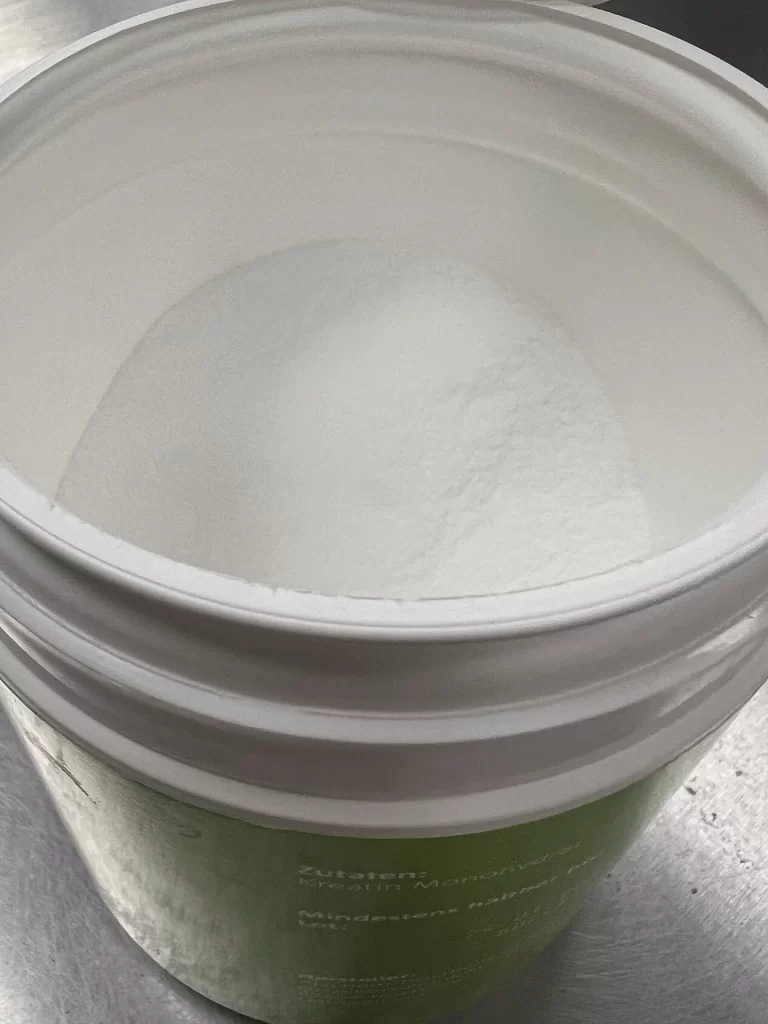
Creatine is the most researched, most proven, and most effective supplement for building muscle and strength. With over 500 peer-reviewed studies spanning 30+ years, the evidence is clear: creatine works. But despite its popularity, there’s still plenty of confusion about how to use it, what type to buy, and whether it’s safe.
This guide covers everything you need to know about creatine — what it does, how to dose it, potential side effects, and how to choose the right product.
What Is Creatine?
Creatine is a naturally occurring compound found in muscle cells. Your body produces it from three amino acids (arginine, glycine, and methionine) — primarily in the liver and kidneys. You also get it from food: red meat and fish contain about 1-2g of creatine per pound.
Creatine’s primary function is to help your muscles produce ATP (adenosine triphosphate) — the energy currency of your cells. During short, intense exercise (like weightlifting or sprinting), ATP is depleted within 8-10 seconds. Creatine helps regenerate ATP faster, allowing you to sustain high-intensity effort longer.
When you supplement with creatine, you increase your muscles’ creatine stores by 10-40%. More stored creatine means more ATP available during training — translating to more reps, more weight, and ultimately, more muscle growth over time.
What the Research Shows
A landmark 2003 meta-analysis published in the Journal of Athletic Training reviewed 22 studies and found that creatine supplementation increased maximal weight lifted by an average of 8%, bench press 1-rep max by 3-7%, and work capacity during repetitive sets by 10-15%.
More recently, a 2021 International Society of Sports Nutrition (ISSN) position stand concluded:
- Creatine monohydrate is the most effective legal nutritional supplement for increasing lean body mass and high-intensity exercise capacity
- It’s effective for both short-term gains (weeks) and long-term gains (months to years)
- It’s safe for healthy individuals across all ages studied
- No credible evidence of adverse effects on kidney or liver function in healthy individuals
Benefits Beyond Muscle
Brain Health and Cognition
Recent research has revealed that creatine benefits brain function. Your brain uses significant amounts of ATP, and brain creatine levels can be increased through supplementation. Studies have shown creatine may improve:
- Short-term memory and reasoning under mental fatigue
- Cognitive performance during sleep deprivation
- Recovery from concussions (preliminary evidence)
Bone Health
Emerging research suggests creatine may help preserve bone mineral density, particularly in older adults. When combined with resistance training, creatine appears to slow age-related bone loss.
Recovery and Injury Prevention
Creatine may reduce muscle damage and inflammation after intense training, potentially speeding recovery. Some research suggests it can help with rehabilitation after injuries, though more studies are needed.
How to Take Creatine: The Complete Protocol
Option 1: The Loading Protocol (Faster Results)
This approach saturates your muscles with creatine quickly, producing results within 1-2 weeks:
- Loading phase (5-7 days): 20g per day, split into 4 doses of 5g
- Maintenance phase (ongoing): 3-5g per day
During the loading phase, you may gain 2-4 lbs of water weight. This is normal — creatine pulls water into your muscle cells. The water weight is temporary and doesn’t reflect fat gain.
Option 2: The Steady Protocol (Simpler)
Skip the loading phase entirely and just take 3-5g per day from the start. Your muscles will reach saturation in 3-4 weeks instead of 1 week. The end result is identical — you just get there a bit slower. This approach is gentler on your digestive system and avoids the water weight spike.
Which Protocol Should You Choose?
If you want results fast (e.g., preparing for an event in 2 weeks), do the loading protocol. If you’re in no rush, the steady protocol is simpler and equally effective long-term. Most men should choose the steady approach — it’s easier to stick with and has fewer side effects.
When to Take Creatine
A 2013 study in the Journal of the International Society of Sports Nutrition found that taking creatine post-workout produced slightly better results than pre-workout. But the difference was small.
Bottom line on timing: Take it whenever you’ll remember consistently. The most important factor is taking 3-5g every day — not when you take it. Many people mix it into their post-workout protein shake for convenience.
What Type of Creatine Should You Buy?
Buy creatine monohydrate. That’s it. It’s the form used in 95%+ of all research, it’s the cheapest, and it’s the most effective. Don’t be swayed by marketing for “advanced” forms:
- Creatine hydrochloride (HCL): Claims to dissolve better and require smaller doses. No research shows it’s more effective than monohydrate. More expensive.
- Creatine ethyl ester: Research shows it’s actually less effective than monohydrate. Save your money.
- Creatine nitrate, citrate, pyruvate: Novelty forms with no advantage over monohydrate. Higher cost for no benefit.
- Kre-Alkalyn (buffered creatine): Claims to be “pH-correct” but studies show no advantage. More expensive.
A high-quality creatine monohydrate costs $15-25 for a container that lasts 3-6 months. Look for products that are third-party tested (NSF Certified for Sport or Informed Sport) if you want guaranteed purity. Capsules work out roughly four times dearer per gram of creatine, since you are paying for the capsule rather than the powder; the cost per use calculator will run that comparison on your own prices.
Side Effects: What to Expect
Water Weight Gain
This is the most common “side effect” — and it’s not actually a bad thing. Creatine draws water into your muscle cells (intracellular water retention), which makes muscles look fuller. This is different from bloating (extracellular water retention). Expect 2-5 lbs of scale weight increase during the first 1-2 weeks.
Digestive Issues
Some people experience bloating, gas, or diarrhea during the loading phase. This is usually caused by taking too much at once or not dissolving the powder properly. The fix: split doses into smaller amounts, dissolve fully in water, and take with food. If the steady protocol doesn’t cause issues, use that.
Cramping and Dehydration
Some early studies suggested creatine might cause cramping, but larger, more rigorous studies have not confirmed this. In fact, creatine may reduce cramping by improving hydration at the cellular level. Still, drink plenty of water — aim for 3-4 liters per day while supplementing.
Hair Loss
One 2009 study suggested creatine might increase DHT (dihydrotestosterone), a hormone linked to male pattern baldness. However, this study was done on rugby players and measured DHT in a way that hasn’t been replicated in subsequent research. No study has directly linked creatine supplementation to hair loss. If you’re genetically predisposed to male pattern baldness, creatine won’t cause it — but it’s something to be aware of if you’re concerned.
Frequently Asked Questions
Do I need to cycle creatine?
No. There’s no evidence that cycling creatine provides any benefit. It can be taken continuously year-round.
Should I take creatine on rest days?
Yes. The goal is to maintain elevated creatine stores in your muscles, not to dose around training. Take 3-5g every day, including rest days.
Does caffeine interfere with creatine?
Early research suggested caffeine might blunt creatine’s effects, but more recent studies show no significant interaction. If you drink coffee or use pre-workout, it won’t negate creatine’s benefits.
Is creatine safe for long-term use?
Studies tracking creatine use for up to 5 years show no adverse health effects in healthy individuals. The ISSN’s official position is that creatine monohydrate is safe for long-term use.
Will I lose my gains if I stop taking creatine?
You’ll lose the water weight (2-4 lbs) and may notice a slight decrease in performance. But the actual muscle tissue you built while using creatine stays. Creatine enhances your training; it doesn’t directly build muscle on its own.
The Only Number That Matters
Three to five grams a day, every day, with or without a loading phase. That is the dose the evidence keeps landing on, and it does not change with body weight in any way that matters.
Buy plain monohydrate, take it whenever you will actually remember, and judge it after three to four weeks rather than three days.
If you’re interested in other evidence-based supplements, check our guide to the top 5 supplements for muscle growth.
This content is for informational purposes only and does not constitute medical advice. Always consult a healthcare professional before starting any supplement, especially if you have kidney conditions or other medical concerns.
Photo: Awkwafaba, CC BY-SA 4.0, via Wikimedia Commons
Been on the fence about creatine for years because of the bro-science around it. The ISSN position stand citation finally settled it for me. One question: if I skip loading and take 5g daily (steady protocol), does timing around the workout matter, or not much?
Worth noting for anyone worried about the ‘water weight’ thing: yes, you’ll retain a bit early on, and no, it’s not bloat like people fear — it’s intramuscular and it actually makes you look fuller. Six years in, still on plain 5g monohydrate and it’s the only supplement I’ve never cycled off.
The post-workout timing point feels a bit overstated for one 2013 study. Everything I have read since says total daily intake is what actually matters, which is basically what you say two paragraphs later. Might be worth softening that part.
Appreciate the evidence-heavy writeup. I’m one of the apparent non-responders — tried loading twice with zero performance bump — but I keep taking it anyway for the health angle. Good to finally read the 10-40% store increase stat, explains why results vary.
The 8% increase in max weight from the 2003 meta-analysis is the kind of concrete number that sells it. Starting the 5g steady protocol today.
2-5 lbs in the first two weeks was not my experience at all. I gained maybe a pound, and my scale barely moved for the first month before it started creeping up. I held steady at 5g the whole time, so nothing fancy.
Anyone else find 3-4 liters a day rough to hit? I sit at about 2.5L and feel fine, no cramps at all. Is the higher number really necessary or is it just a buffer for people who sweat a lot?
Two years on 5g a day and my hairline has not moved. That 2009 DHT study gets passed around like gospel, so it is good to see it put in context here.