

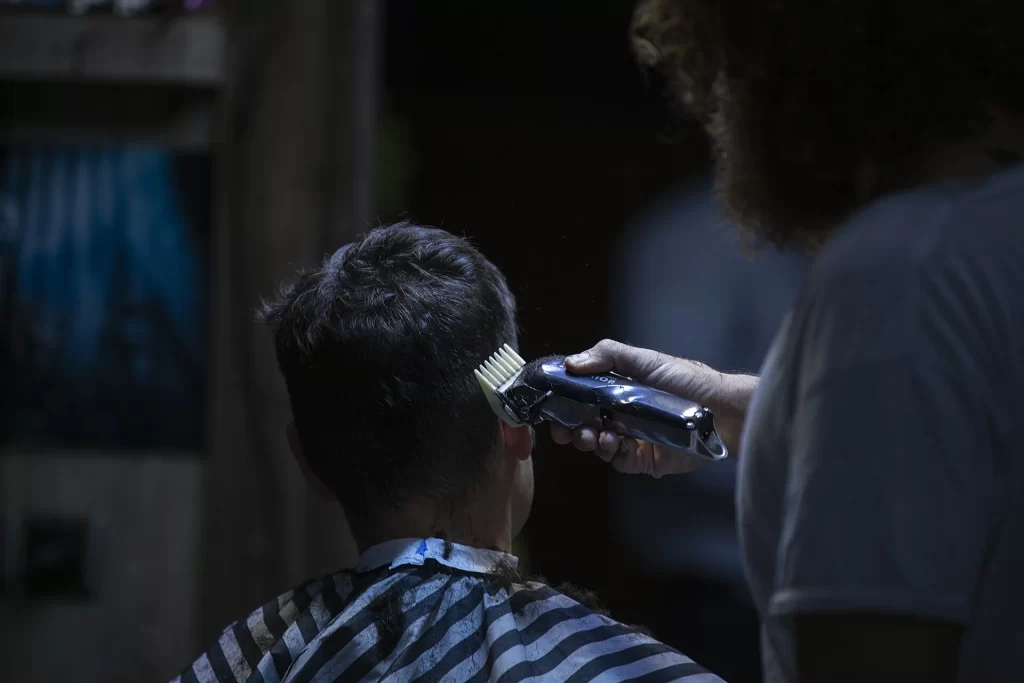
You sit down in the barber chair. “Can I get a beard fade?” you say. Your barber nods, starts clipping, and ten minutes later you’re looking at something that’s… fine. But it’s not quite what you had in your head. Maybe the fade is too high. Maybe the neckline is a hard line when you wanted it blended. Maybe the whole thing just looks a little off.
The problem isn’t you, and it’s probably not your barber. The problem is that “beard fade” means different things to different people. Walk into ten different barbershops and say “beard fade,” and you’ll get ten different results.
In this guide, I’m going to break down exactly how to describe a beard fade so your barber knows what you want the first time. We’ll cover the three fade heights, the four parameters that matter most, and the exact script you can use next time you sit in the chair.
What Is a Beard Fade, Exactly?
A beard fade is when the hair on your cheeks and sideburns gradually gets shorter as it approaches your sideburn line and hairline. Instead of a hard line where your beard ends and your skin begins, there’s a smooth transition — a “fade” — from longer beard hair down to skin.
Think of it like this: a regular beard has a clear border. A faded beard has a gradient border. The effect is cleaner, more polished, and it makes the beard look intentional rather than just something you stopped shaving.
There are three basic fade heights, and the one you choose makes the biggest difference in how it looks.
Low Fade
The fade starts low — around the bottom of your sideburn, near your earlobe. Everything above that point is full beard length; everything below is faded down to skin. This is the most conservative option and the easiest to pull off if you’re new to faded beards.
Best for: guys with shorter beards, guys who want something low-maintenance, guys who work in conservative environments.
Mid Fade
The fade starts around the middle of your sideburn — roughly temple level, or where the top of your ear meets your head. This is the most popular option because it’s visible enough to look intentional but not so high that it changes the shape of your face.
Best for: most guys, medium to full beards, anyone who wants that “polished but not overdone” look.
High Fade
The fade starts high — well up into the sideburn area, sometimes almost to the temple. This creates a dramatic contrast and really makes the beard pop. It’s also the most likely to go wrong if your barber isn’t experienced with beard fades.
Best for: guys with thick, full beards, guys who want a more modern/statement look, guys who already know their barber well.
As a starting point, most guys look best with a mid fade. It’s versatile, it’s hard to mess up too badly, and it works with almost every beard style and face shape.
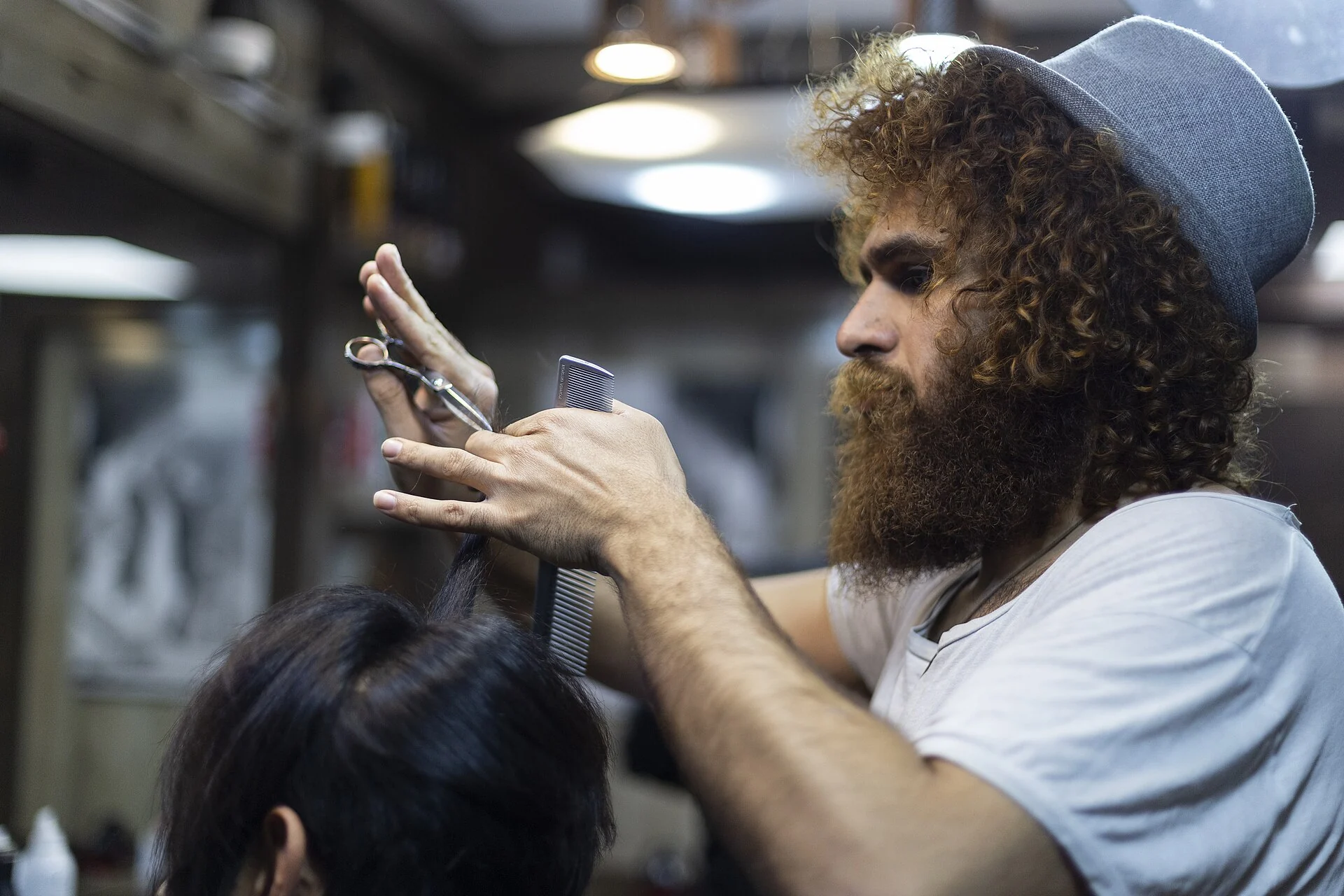
The 4 Parameters You Need to Describe
Saying “mid fade” isn’t enough. There are four specific things your barber needs to know. Get all four right, and you’ll walk out with exactly what you wanted. Miss one, and you’ll be explaining why it’s “fine” while secretly wishing you’d said more.
1. Fade height
We already covered this: low, mid, or high. Be specific about where the fade starts. “Mid fade, starting around temple level” is better than just “mid fade.” If you’re not sure, show with your finger — point to where on your sideburn you want the fade to begin.
2. Bottom length (skin vs. #1)
What’s the shortest the fade gets? Most guys go down to skin (zero guard) at the very bottom, but some prefer a #1 or even #2 guard for a softer, less dramatic look. This is personal preference — skin fades are sharper and more modern, while #1 fades are more subtle and low-commitment.
If it’s your first beard fade, start with a #1 at the bottom. You can always go shorter next time. You can’t go back up for two weeks.
3. Top length (what stays)
How long is the beard above the fade? This matters because the contrast between the fade and the beard is what makes the fade look good. If your beard is only 3mm long, a skin fade will look extreme. If your beard is an inch long, the same fade looks balanced.
Tell your barber how you want the main part of your beard handled — same length, trim the flyaways, shape it up, etc. — and make sure the fade complements it, not fights it.
4. Neckline
This is the most commonly messed-up part of a beard fade. The neckline is where your beard ends on your neck. There are two basic approaches:
- Natural / blended: The fade continues down onto your neck, gradually tapering to nothing. No hard line. This is the modern look and what most guys prefer with a faded beard.
- Hard line / defined: A crisp, sharp line marking the bottom of your beard. This is more old-school and works better with very full, long beards.
For a beard fade, go with the natural blended neckline 9 times out of 10. A hard line with a fade can look dated or like two different styles that don’t belong together.
The Exact Script to Give Your Barber
Stop trying to memorize everything. Use this script next time. It’s specific enough that any competent barber will know exactly what to do:
“I’d like a mid beard fade, starting around temple level. Take it down to a #1 at the bottom — no skin fade, keep it soft. Leave the main beard at its current length, just clean up the flyaways and shape the cheek line. Neckline natural and blended, no hard line.”
That’s it. 47 words, four clear parameters, zero ambiguity.
If you want something different, just swap out the parts:
- Low fade, skin: “Low beard fade, starting just above the earlobe. Skin fade at the bottom. Natural neckline.”
- High fade, #1 bottom: “High beard fade, starting up near the temple. #1 at the shortest point. Blended neckline.”
- Short beard + mid fade: “Take the whole beard down to a #3, and do a mid fade down to skin on the sides. Blended neckline.”
Bring a Reference Photo (Yes, Really)
You might feel silly showing a photo to your barber. Don’t. Barbers deal with vague descriptions all day, and a picture is worth a thousand words — especially when “mid fade” means something different to every person.
Here’s how to do it right:
- Find someone with a similar beard type. If you have a patchy, thin beard, don’t show a photo of a guy with a full, thick lumberjack beard and expect the same result. The fade will look different depending on how much hair you have.
- Find someone with a similar face shape. A high fade on a round face looks different than a high fade on a square jaw. Look for guys whose face shape is close to yours.
- Point to what you like specifically. “I like the height of this fade” or “I want the neckline to look like this” is more useful than just showing the whole photo.
- Don’t bring a celebrity photo with perfect lighting. Studio shots make everything look better than it will in real life. Find a real photo — a random guy on Instagram, a friend, a Reddit post — where the lighting is normal.
Your barber would much rather look at a photo than guess at what “not too high, not too low” means. Bring one.
Home Maintenance: How to Keep It Looking Fresh
A beard fade looks best for about 1-2 weeks, depending on how fast your hair grows. After that, the line starts to blur and you lose that clean gradient. Here’s how to stretch it out.
Between barber visits
- Use beard oil daily. It keeps the hair soft, moisturizes the skin under the fade, and prevents the dry, flaky look that ruins a clean fade. 3-5 drops, massaged in.
- Brush or comb it daily. A quick brush in the morning trains the hair to lay flat and keeps the shape looking intentional.
- Don’t touch the fade yourself. The gradient is the hard part. If you try to trim it at home, you’ll probably create a hard line and have to go get it fixed anyway. Leave the fade to your barber.
- Trim stray hairs on the neck. You can carefully clean up any obvious neck hairs that grow below the fade line with a trimmer or a razor — just don’t go anywhere near the gradient itself.
How often to get it touched up
Most guys need a beard shape-up every 2-3 weeks to keep a fade looking sharp. If your hair grows fast, every 10-14 days. If you’re okay with it growing out a bit, 3 weeks works fine.
Here’s the thing about beard fades: they look best at about day 3-7. Right after the barber, it can look too sharp. After a week, the hair has grown just enough to soften the line a little without losing the shape. That’s the sweet spot.
Common Mistakes to Avoid
1. Asking for a “fade” without specifying height
This is the #1 mistake. “Beard fade” could mean anything from a subtle low fade to a dramatic high skin fade. If you leave it up to your barber’s interpretation, you’re rolling the dice. Use the four parameters from section 3.
2. Getting a fade on a patchy beard
A fade draws attention to your beard. If your cheeks are patchy or your beard is thin, a fade will make those gaps more visible, not less. For patchy beards, you’re usually better off keeping the sides natural or going with a shorter, more uniform length.
If you’re not sure whether your beard is full enough for a fade, check out our guide on how to fix a patchy beard — it covers exactly when a fade works and when it doesn’t.
3. Trying to do it yourself with a cheap trimmer
Home beard trimmers are great for maintaining length and cleaning up necklines. They are not great for fades. Creating a smooth gradient takes practice and the right tools — zero-gap blades, different guards, a steady hand. Leave the fade to a professional. The $20 you save isn’t worth the 2 weeks of looking like you let a kid cut your beard.
4. Getting too high a fade on your first try
First beard fade? Start low or mid, with a #1 at the bottom. You can always go higher and shorter next time. But if you start with a high skin fade and hate it, you’re stuck with it for a month. Build up gradually.
5. Forgetting the cheek line
The fade is on the sideburn and jaw area, but the cheek line is what frames your face. When you get a beard fade, make sure your barber also shapes the cheek line — the natural line where your beard ends on your cheeks. A great fade with a sloppy cheek line looks half-done.
Frequently Asked Questions
What’s the difference between a beard fade and a taper?
In theory, a fade goes all the way down to skin (or very short), while a taper gradually gets shorter but doesn’t go to zero. In practice, a lot of barbers use the terms interchangeably. If it matters to you, be specific about what you want the shortest length to be.
Can I get a beard fade with a short beard?
Yes, but the contrast will be less dramatic. A fade on a 3mm beard is subtle — it’s more about a clean line than a visible gradient. If you want the fade to be a feature of your beard, grow the main beard out to at least 5-8mm first.
How much does a beard fade cost?
It depends on where you live and the barbershop. Most places charge $10-20 extra for a beard fade on top of a haircut. If you’re just getting the beard done (no haircut), it’s usually $15-30. High-end barbershops in big cities charge more. Which is the moment to ask whether the home option pays for itself: the cost per use calculator works out how many barber visits a clipper has to replace before it has earned its price back.
Will a beard fade make me look more put-together?
Yes — that’s the main reason guys get them. A fade signals that you put thought into your appearance, without looking like you tried too hard. It’s the difference between “guy who stopped shaving” and “guy with a beard style.” For more on overall beard maintenance, check out our beard grooming 101 guide.
How do I find a barber who’s good at beard fades?
Instagram is your best bet. Search for “[your city] barber” and look at their work — specifically the before/after beard photos. If a barber has 20+ photos of clean, even beard fades, they probably know what they’re doing. If all their photos are just haircuts, find someone else.
Two Ways to Ask
If it is your first fade, bring a photo and go conservative: the shortest guard one step longer than you think you want, with the neckline left natural.
If you know what you like, say the four numbers out loud: height in millimetres, bottom length, top length, and how you want the neckline finished. Barber-speak is a numbers game, and vagueness is what produces a surprise.
Related Articles
- Beard Grooming 101: How to Trim, Shape & Maintain Your Beard
- How to Fix a Patchy Beard: 7 Methods That Actually Work
- How to Grow a Beard Faster: Tips for a Fuller Beard
Photo: Mostafameraji, CC BY-SA 4.0, via Wikimedia Commons
Photo: Mostafameraji, CC BY-SA 4.0, via Wikimedia Commons
This content is for informational purposes only. Everyone’s beard grows differently based on genetics, age, and health. If you have concerns about hair loss or skin conditions, consult a dermatologist.
Leave a comment
Thanks — your comment is in the queue and will appear once it has been read.