


Most adults need between seven and nine hours of sleep. That range covers nearly everyone, and it still does not give you your own number, because yours sits somewhere inside it. Eight is the middle of the band, not a law. It reads like a law because it came from a labor slogan rather than a sleep lab. You can find your real number in two weeks with three things: a wake time you refuse to move, a nightly note of when you fell asleep, and a sleepiness score you write down three times a day.
Seven to Nine Hours Is a Range, and Your Number Sits Inside It
Sleep need is the amount your brain and body require to run at full capacity. For adults, the range published by sleep research organizations sits at seven to nine hours a night, drawn from decades of work on attention, memory, glucose handling and immune function.
The spread inside that band is real, but narrower than most men assume. A small number of people carry gene variants that let them function on six hours. Hold everyone else at six hours a night for two weeks and their reaction times keep degrading while their own ratings of tiredness flatten out. They stop noticing. Performance does not stop dropping.
Eight Hours Came From a Factory Floor, Not a Sleep Lab
The eight-hour day is an industrial-era demand. Campaigns for shorter working days in the 1800s pushed a slogan that split the clock into eight hours of work, eight of recreation and eight of rest. Sleep got the leftover third by arithmetic.
You can see the damage today. A man who wakes at 6am sets a 10pm bedtime, lies in bed for eight hours, sleeps for six and a half, and decides he has insomnia. He has a schedule problem. Time in bed is not sleep.
Your Biology Sets the Range; Your Schedule Decides Whether You Hit It
Two numbers matter more than any other. Sleep need is how much sleep your body wants. Sleep opportunity is how long you give it the chance to happen. Men who suspect they are short sleepers usually have an opportunity problem, and the thief is the last hour of the evening rather than the whole night.
Aim at the wake time, not the bedtime. Bedtime drifts, because it depends on when the day ends. A fixed wake time is a hard edge, and sleep onset pulls earlier to protect it over one to two weeks. Handle the environment side first with these sleep hygiene habits that actually change your numbers.
The Two-Week Test Starts With a Fixed Wake Time
Fourteen days is long enough for the pattern to settle and short enough that you will finish. You need a phone and a note.
Day 1: Pick a Wake Time You Can Hold for 14 Days, Weekends Included
Set one alarm and leave it there for the full two weeks, even after a bad night. A wake time that moves makes the data useless, because you cannot tell whether a rough afternoon came from short sleep or a shifted clock.
Every Morning: Write Down Two Numbers
Note the clock time you turned the light off, and your best estimate of when you fell asleep. Guessing is fine. Rough data from 14 nights beats precise data from three.
Three Times a Day: Score Sleepiness on the Same 1-5 Scale
Score at 10am, 3pm and 8pm, and write the number in your phone before you can revise it.
- 1: fully alert, would not sleep if you lay down
- 2: awake and comfortable
- 3: noticeably slowed, still functional
- 4: fighting it
- 5: nodding off while sitting still
The 3pm score carries the most signal. It sits far enough from waking to show a real deficit and far enough from bedtime to dodge the normal evening dip.
Day 15: Sort the Nights and Compare the Afternoons
Order the 14 nights by estimated hours asleep, pull the three longest and the three shortest, then average the 3pm scores for each group. If the long nights beat the short ones by a full point or more, you are under your number. If the averages match, you have found your ceiling.

What Your Two-Week Numbers Actually Mean
Sleep restriction studies that hold people at four, six and eight hours in bed for two weeks keep producing the same shape of result. Attention and reaction time degrade in steps as time in bed drops, and the six-hour group rates itself as barely impaired.
| Nights at this length | Daytime signal | What it usually means | First change |
|---|---|---|---|
| Under 6 hours | Sugar cravings by 2pm, losing the thread in meetings, dozing in a dark room | Chronic restriction. The deficit builds whether you feel it or not. | Move lights-out earlier in 15-minute steps, keep the wake time fixed |
| 6 to 7 hours | You function, but you need the afternoon coffee and your patience is gone by evening | Borrowed attention. Looks stable from outside, sits below your baseline. | Add 30 minutes of sleep opportunity for two weeks, then re-score |
| 7 to 8 hours | Steady focus through the afternoon, no urge to nap | You are at or near your number | Change nothing. Hold the schedule another week to confirm. |
| 8 to 9 hours | Steady focus, and you wake before the alarm | You may sit at the upper end of your range | Keep the wake time. Let bedtime drift later only if you wake early twice running. |
| 9+ hours, still foggy | Heavy mornings, headaches, low mood | Long time in bed without enough restorative sleep. Often a symptom, not a target. | Do not add time in bed. Check the escalation list below. |
Read the grid as a starting range, not a verdict. A rough week at work will drag your 3pm scores down without saying anything about your sleep need.

Under Your Number and Over Your Number Look Different by 3pm
Too little sleep shows up as instability: you lose words mid-sentence, you snap over small things, and you want sugar in the afternoon. A nap fixes it for a few hours. Too much time in bed shows up as inertia: you wake heavy with a headache, and a nap makes it worse.
Weekends and Naps Repay Sleep Debt at a Bad Exchange Rate
A Saturday lie-in buys back some of the deficit and costs you your rhythm. Sleeping two hours later pushes the body clock later, which makes Sunday night harder and Monday worse.
Naps work better. Keep them under 30 minutes and before 3pm, and treat them as a patch rather than a repayment plan. If you need one every day to stay upright on seven hours, the fix belongs at night. For the parts of sleep that naps cannot touch, work through these science-backed ways to improve sleep quality.
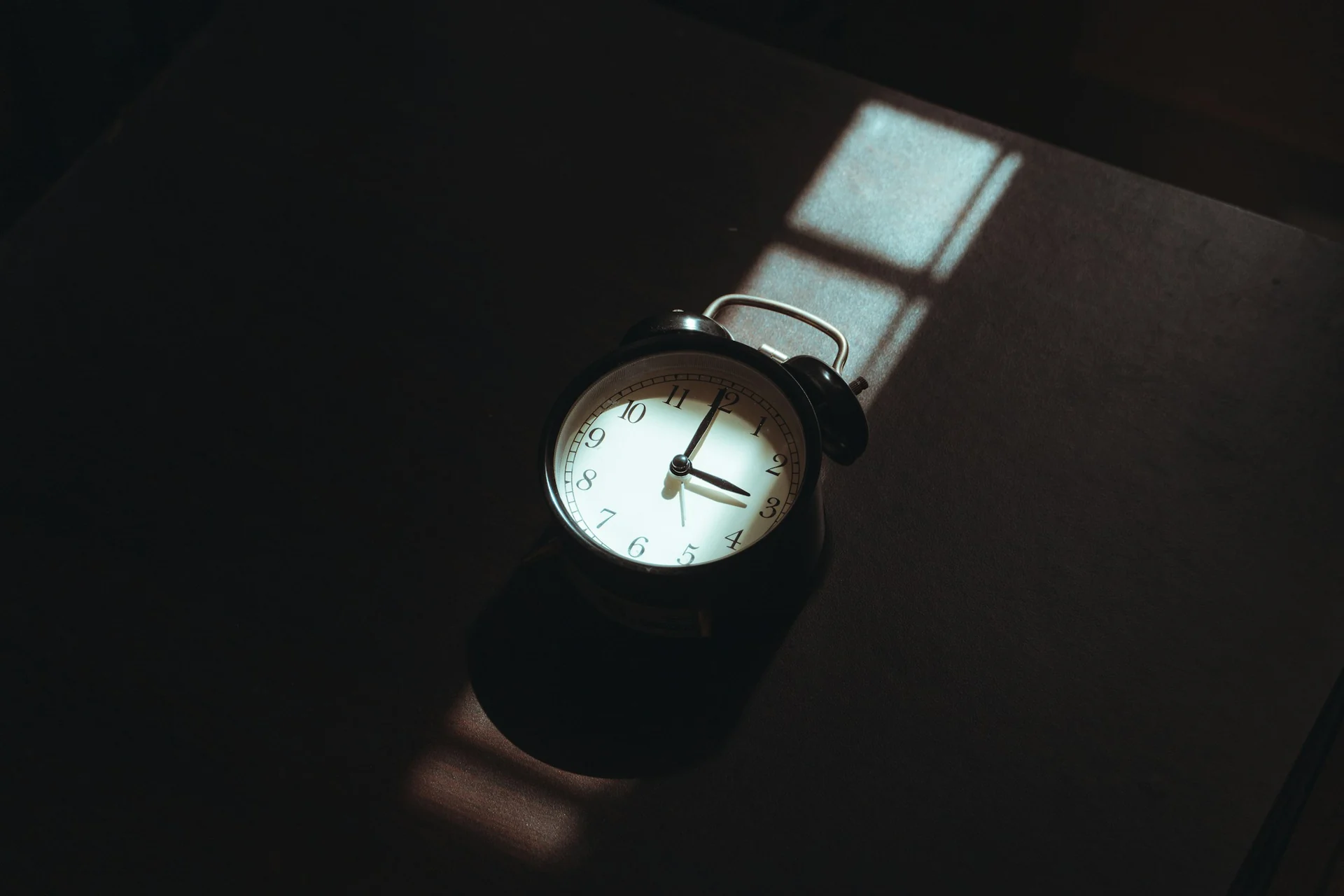
Eight Hours in a Dark Room Should Not Leave You Exhausted
Some sleepiness is not a length problem, and no schedule will fix it. If you have held seven to nine hours on a consistent wake time for a month and you still fall asleep sitting still, see a clinician, especially if any of these apply.
- You feel sleepy while driving, in meetings or watching television most days
- Your partner reports snoring with pauses, gasping or stops in your breathing
- You fall asleep within five minutes of lying down every night
- You wake with headaches or a dry mouth most mornings
- Your legs must move at night, and moving them is the only relief
Those signals point toward sleep apnea, restless legs, a medication effect or a mood problem. Each one needs an evaluation rather than a better bedtime. If your sleep time is already fixed, these are the moves that raise your energy without a caffeine crash.
Straight Answers to the Questions Men Ask About Sleep Length
Is six hours enough if I feel fine?
Feeling fine is the weakest available test, because the feeling adapts faster than the performance does. Run the two weeks before you accept six hours as your number.
Does sleep need change with age?
Time asleep tends to fall with age while time in bed stays flat or grows. That gap usually comes from lighter, more fragmented sleep rather than a lower need.
Do I need more if I train hard?
Within the range, yes. Men in heavy training blocks tend to sit at the top of the seven-to-nine band. If you lift four or more times a week and cut sleep to fit the schedule, the training pays for it.
Can I catch up at the weekend?
Partly, and at a cost. Sleeping two hours later recovers some alertness and shifts your clock later, which is why Sunday nights turn difficult. Cap the weekend wake time an hour past your weekday one.
The Number Is a Range
Seven to nine hours is the range; eight is a slogan that survived because it is memorable. Your own number sits inside the band, and a fixed wake time plus two weeks of notes will find it.
Tonight, write down the exact time you turn off the light and set tomorrow’s alarm for the same time as today’s. That single data point is day one, and the rest is repetition. If sleepiness persists past four weeks on a consistent seven to nine hours, take it to a clinician.
Tonight, set tomorrow’s alarm for the same time as today’s, and write down the exact clock time you turn off the light. That is day one. The morning habits that protect your wake time are worth adding in week two.
This article is informational only and is not medical advice. If you take prescription medication, have a diagnosed condition, or your sleepiness persists for more than four weeks despite a consistent schedule of seven to nine hours, talk to a clinician.
Leave a comment
Thanks — your comment is in the queue and will appear once it has been read.